

Having the appropriate corporate structure can help decrease risk, reduce taxes, and increase cash flow — learn what to consider.
An entity’s corporate structure has become one of the most important factors separating great companies from good companies. Yet it’s often overlooked, with companies having the same corporate structure for decades. With the world changing faster than ever before, revisiting your corporate structure is critical.
Why re-evaluating corporate structure is important
Having the appropriate corporate structure can help decrease risk, reduce taxes, and increase cash flow. Over the last decade, risk has increased and the cost of doing business has skyrocketed. Insurance premiums continue to rise, lawsuits are more frequent and serve, and nuclear verdicts are now a common term the average non-transportation individual understands. Throw in two major tax bills, and you can see why it’s worth making sure you have a structure fitting your organization’s needs.
How can changing your company’s corporate structure reduce risk?
Evaluate your company’s risk profile and activities. Working with an attorney, consider separating out different activities into separate legal entities (typically under a holding company structure), especially those with a heightened level of risk (trucking, third party repair, etc.) or would have substantial value (equipment leasing, real estate).
Due to all the factors listed above, some transportation companies are working to set up new legal entities for all separate business activities/lines, and some are even creating an entity for department of transportation compliance/safety.
Tax and cash flow considerations with corporate structure
Assess your tax situation weighing the many tax changes included in the new tax bill passed in early July. Considerations include:
- The type of entity for tax purposes (corporation, S Corporation, Partnership, single member LLC)
- Nexus footprint
- Transition plan (what does the future ownership of the company look like)
- Cash flow
- If a re-organization can be done in a tax-free manner
Corporate structure considerations for transportation companies: An example
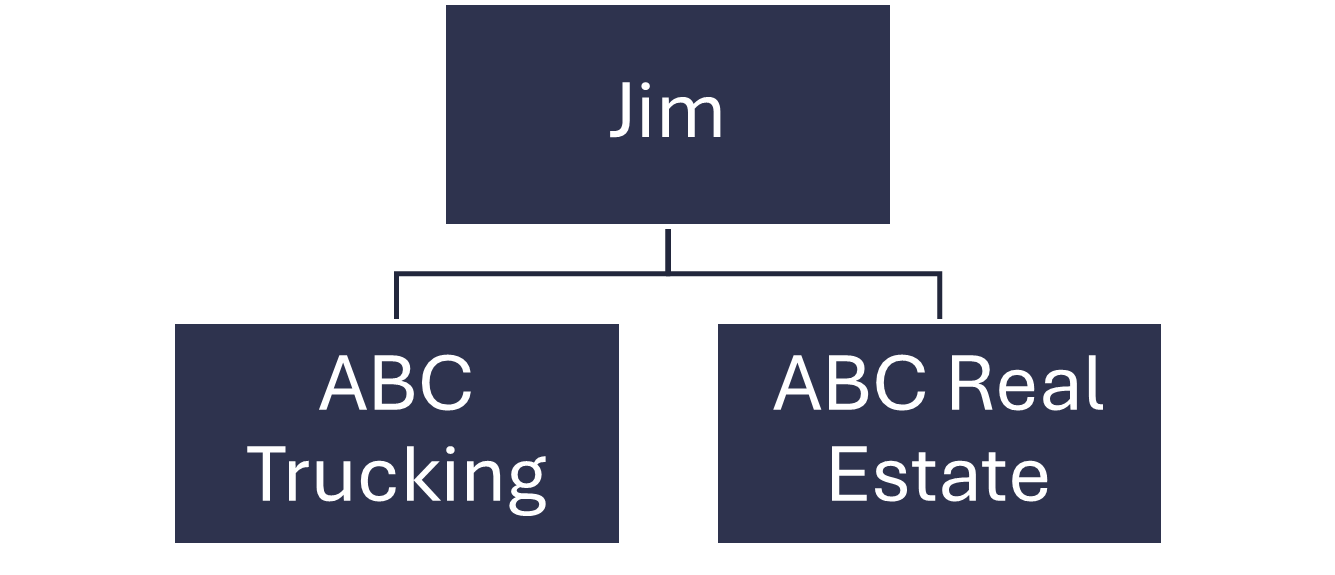
Let’s look at an example of a common scenario we run into. ABC Trucking Company, Inc. (ABC), has a fleet of 200 power units operating throughout 25 different states. ABC also has a brokerage division, leases equipment to owner-operators, and does a fair amount of third-party repair work from its repair shop. Currently, all these activities are inside an S corporation and is owned 100% by Jim. Jim also owns 100% of the real estate in ABC Real Estate, a single member LLC outside of the S corporation.
The current structure looks like the following:
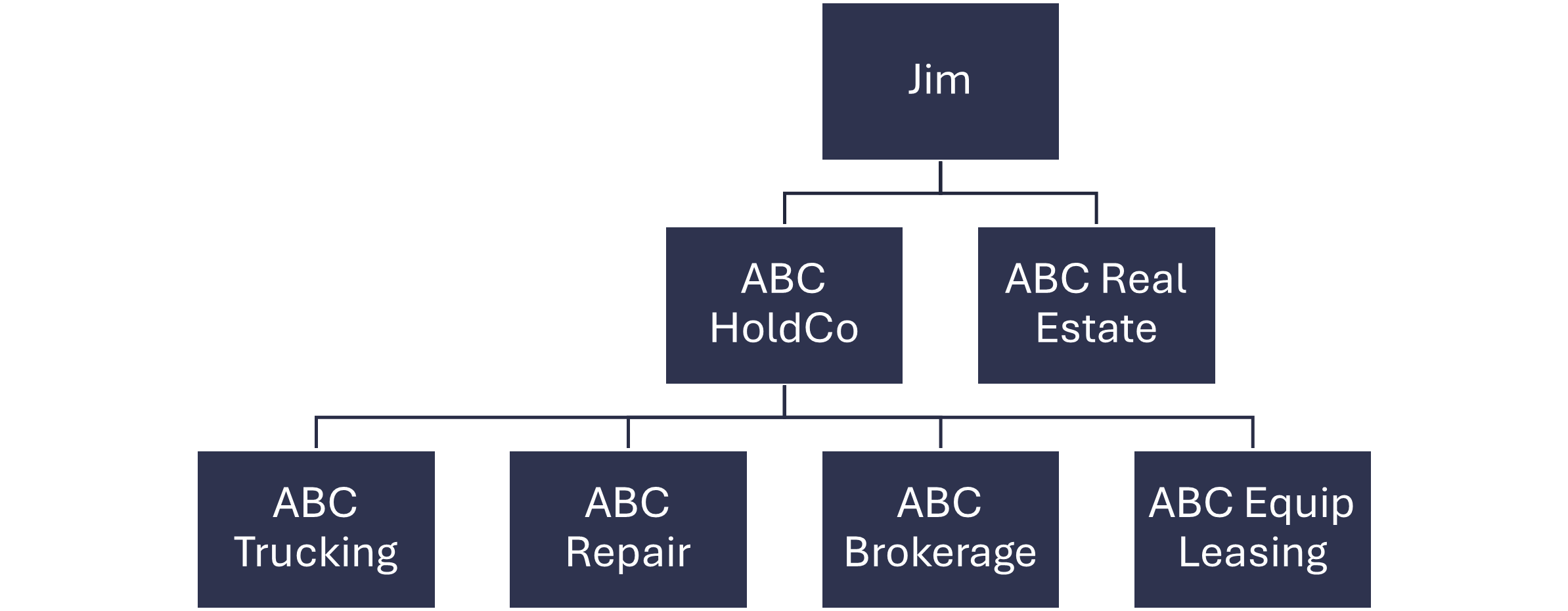
Jim wants to reduce his risk in ABC, so he looks to create a holding company structure and split off some of the activities. Jim creates ABC HoldCo, Inc, as well as some wholly owned subsidiaries, ABC Brokerage, ABC Equipment Leasing, and ABC Repair Services (either as LLCs or qualified subchapter S subsidiaries). Jim then enters a tax-free reorganization, where he exchanges 100% of his shares of ABC Trucking for shares of ABC HoldCo. ABC Trucking would subsequently make a QSub election making it a disregarded entity.
This is what the new structure would look like:
How CLA can help with corporate structure considerations in transportation
Changing corporate structure needs to be well thought out and collaborative with industry knowledgeable advisors. From our experience working through countless holding company restructuring plans with our transportation, logistics, and distribution clients, these trusted professionals always include accountants and attorneys specializing in the industry. As the execution begins, involving your bankers and insurers is also recommended.