

Key insights
- 2022 was a real-world trial for 60/40—not proof diversification is broken. Stocks and bonds fell together as inflation surged and the Fed tightened rapidly, producing an ~20% drawdown in a typical balanced portfolio.
- Forward-looking conditions for bonds are materially better now. Higher starting yields and a more favorable inflation outlook improve expected (“real”) returns and reduce rate-sensitivity.
- The diversification benefit should improve as correlation normalizes. Stock-bond correlation spiked during the 2022 bond-volatility shock. With volatility receding, the expectation is correlation returns toward its usual range, strengthening 60/40.
Is a 60/40 portfolio right for you? Get a personalized analysis.
For decades, the 60/40 balanced portfolio — allocating 60% to equities and 40% to bonds — has been a foundational approach to long-term investing. Equities were relied upon to generate growth, while bonds were expected to provide income and stability during periods of high equity market volatility.
Explore the recent history of the 60/40 portfolio, its outlook, and recommendations for long-term investing.
A recent history of the effectiveness of the 60/40 portfolio
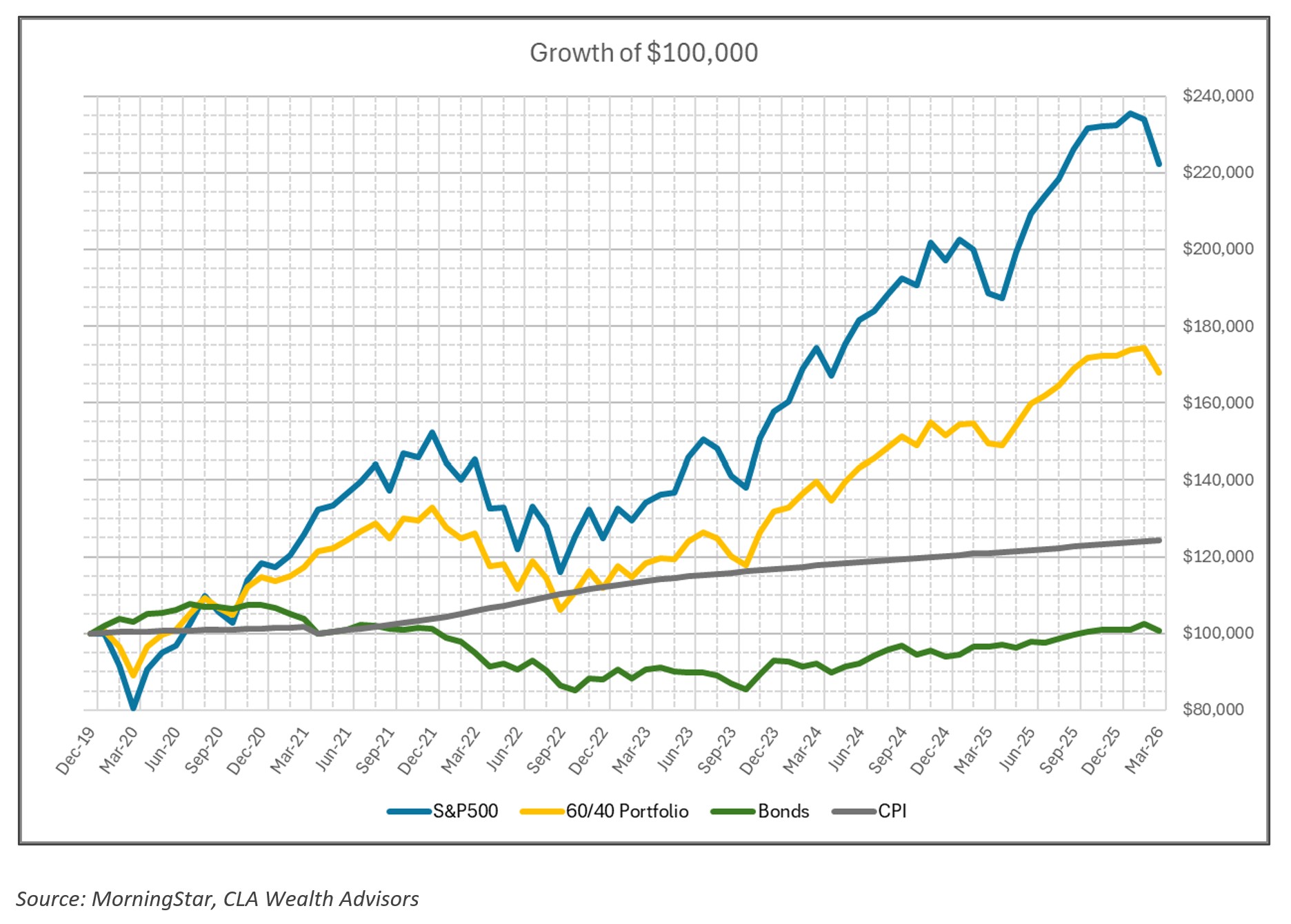
In late 2022, the effectiveness of the 60/40 portfolio came under increased scrutiny as stocks and bonds declined simultaneously. The primary catalyst was inflation nearing 9% and the Federal Reserve’s response — tightening monetary policy at the fastest pace since the early 1980s. As interest rates rose sharply, equity valuations compressed and bond prices fell, resulting in a drawdown of roughly 20% for a typical balanced portfolio. (Source: Morningstar and CLA Wealth Advisors)
From 2023 through 2025, questions about bonds persisted, as their returns only marginally kept pace with inflation, while equities delivered strong gains, supported by improved earnings visibility and valuation expansion. Bond performance improved once the Fed cut interest rates in 2024, but by then much of the damage was done. From 2021 to 2025, bond investors barely broke even while losing almost 23% of their purchasing power to inflation, fueling a continued debate over the effectiveness of bonds as a stabilizing force in a diversified investment portfolio.
A constructive future for the 60/40 portfolio
The improved valuations of both stocks and bonds should allow for better returns in balanced portfolios over the next three years. Should stocks falter, bonds are in a better position to perform their historical role of providing income and portfolio stability.
To explain our view in more detail, let’s start with bonds:
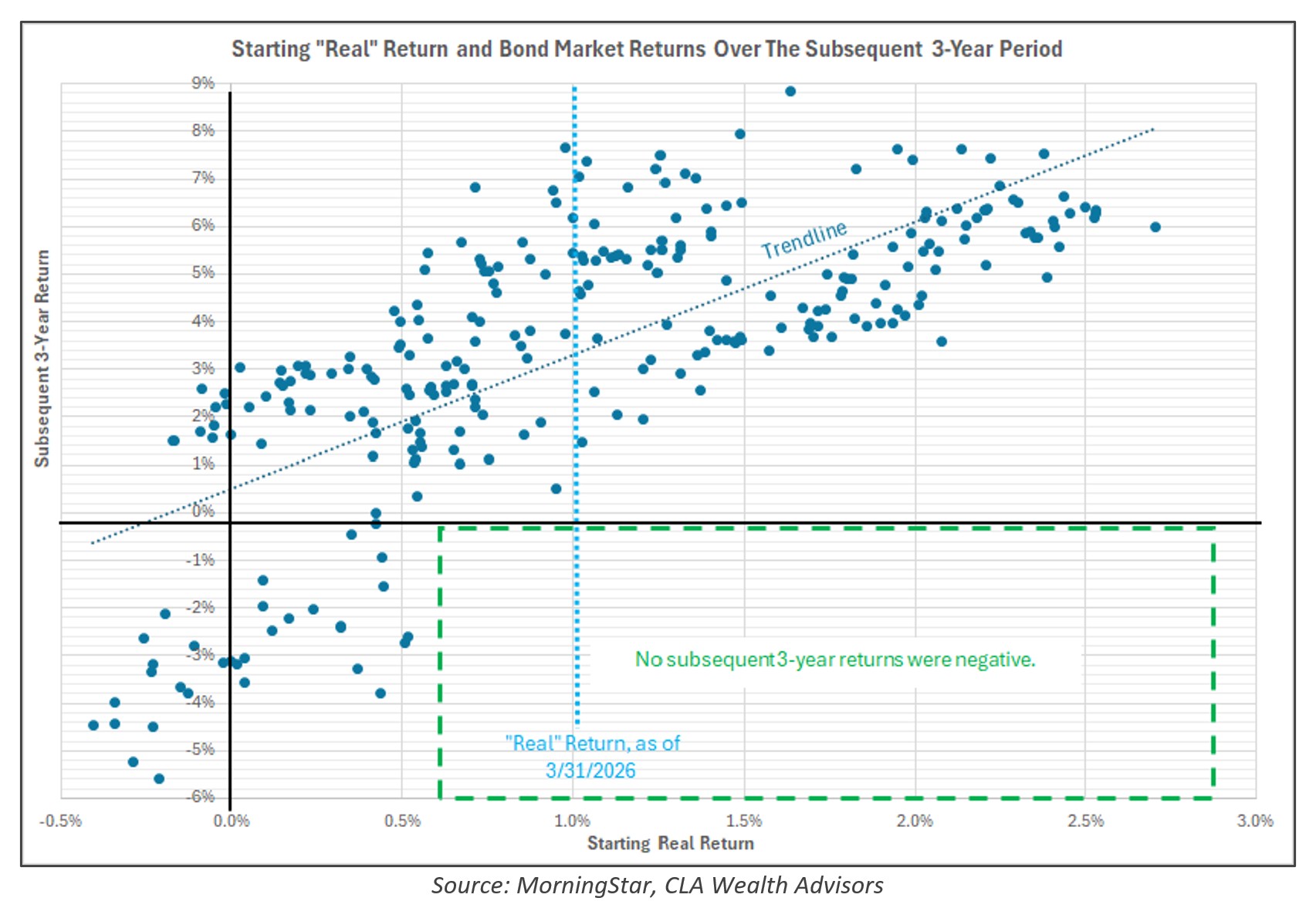
- Higher starting yields have boosted expected returns and reduced sensitivity to modest changes in interest rates
- An improved inflation outlook means “real” returns are far more compelling
- As shown in the chart below, when “real” returns exceeded 1%, investors haven’t experienced losses in any subsequent three-year holding period
What is stock-bond correlation?
CLA expects fixed income to regain its role as a stabilizing component in a diversified portfolio. Correlation measures how two investments move in relation to one another over time. In a diversified portfolio, stock‑bond correlation describes whether stock prices and bond prices tend to rise and fall together, move in opposite directions, or behave independently.
When stocks and bonds have low or negative correlation, bonds may help cushion portfolio losses when stocks decline, smoothing overall returns and reducing volatility. When correlation rises, meaning stocks and bonds move in the same direction, the diversification benefit is diminished, and portfolio declines can be more pronounced during market stress.
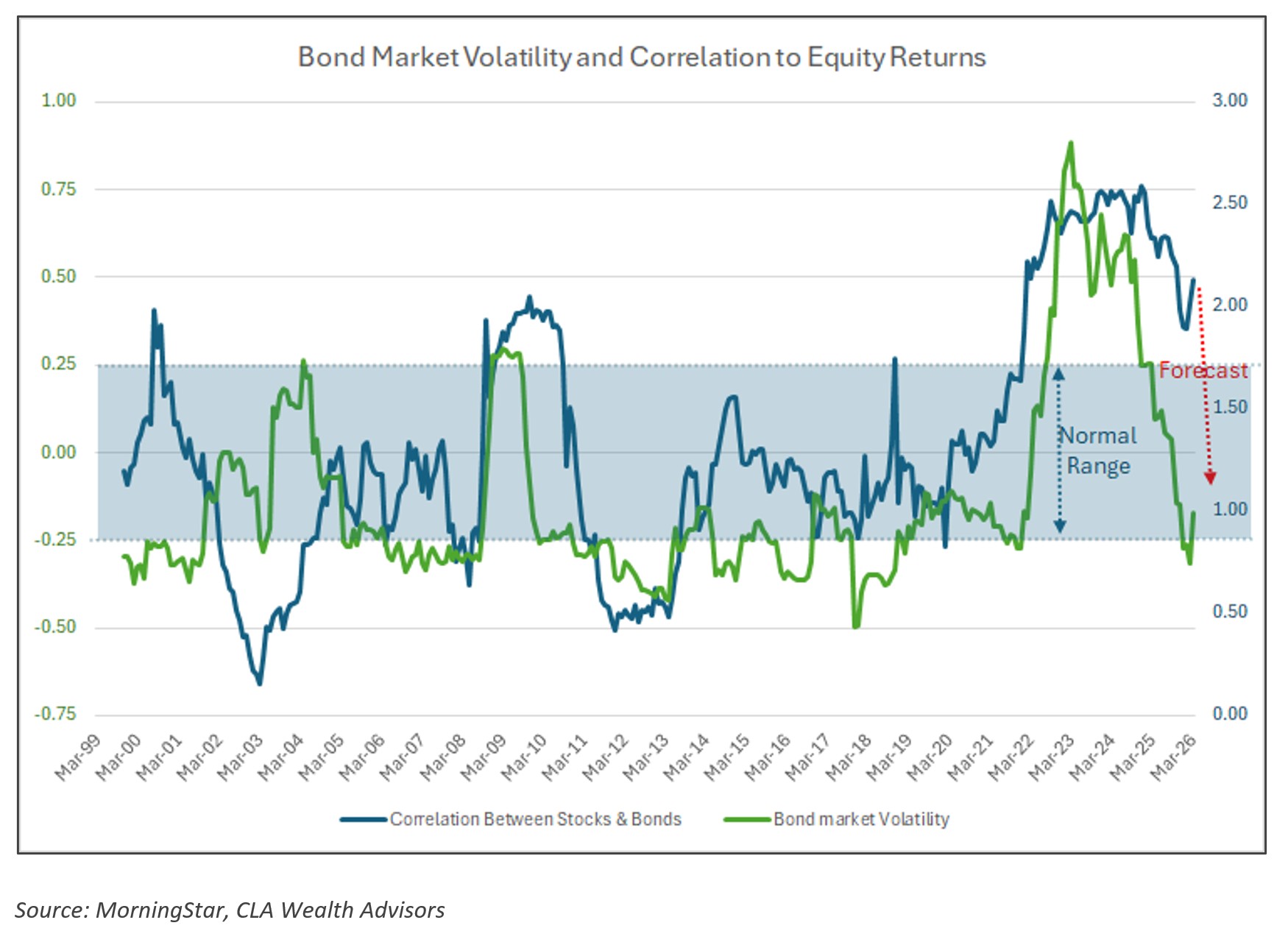
As shown in the chart below, the correlation between stocks and bonds usually falls somewhere between -0.25 and +0.25. The chart also shows the correlation tends to increase as bond market volatility picks up.
Looking back at 2022, bond volatility was so severe, it helped drive the correlation up to 0.75. However, volatility has since receded while the correlation hasn’t. CLA believes the correlation between stocks and bonds is likely to normalize, allowing bonds to better serve their traditional role of providing stability and helping offset equity volatility within a diversified portfolio.
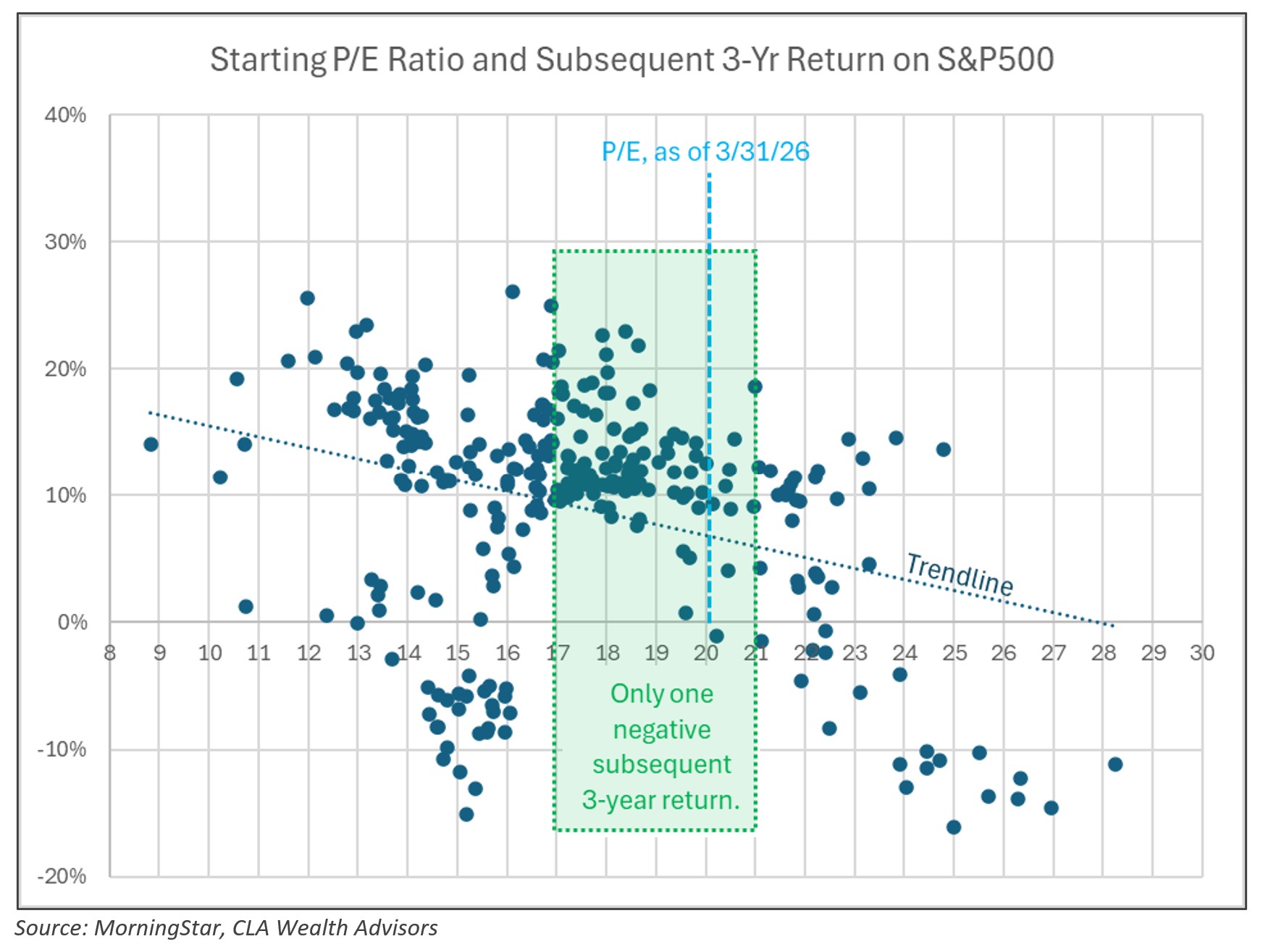
After the first quarter sell-off in 2026, equity valuations are now in the price-to-earnings ratio sweet spot, which runs from 17-21x.
What this means for your investment portfolio
Starting conditions matter. The events of 2022 should be viewed as an extreme macroeconomic shock, not as evidence diversification has failed. Today, with bond yields reset meaningfully higher, inflation moderating, and valuations across asset classes more attractive, the foundational case for diversification is stronger than it has been in many years.
For long‑term investors, this environment favors discipline, thoughtful rebalancing, and patience rather than wholesale portfolio changes based on past performance.
These dynamics reinforce the case for maintaining diversified 60/40 portfolios rather than adding to equities following a period of strong stock market performance. Equities remain a critical driver of long-term growth, but the improved outlook for fixed income reduces the need for investors to depend exclusively on stocks to achieve their return objectives.
How CLA can help with portfolio diversification
Is a 60/40 portfolio right for you? CLA can help you determine how to structure your portfolio by offering thoughtful, goals-focused investment guidance based on careful analysis.
Our wealth advisors work with clients to review asset allocation, diversification, and overall risk considering today’s market environment, while keeping a long-term perspective in mind. We help clients better understand how their portfolios are positioned and discuss potential adjustments as their goals, market conditions, and economic factors evolve.
Contact us
Is a 60/40 portfolio right for you? Get a personalized analysis. Complete the form below to connect with CLA.